
Always-On AI Agents in the Astra Era: Who Controls the Loop?
Learn how always-on AI agents work, what GPT-6 Astra changes, and how to secure agent loops with scoped permissions, durable memory, and clear stop conditions.
Zero Trust AI
AI agents are not just chat windows. They are non-human actors touching code, SaaS, cloud, data, tickets, browsers, and workflows. This hub collects the controls security teams need before agents become invisible infrastructure.
Reading path
Learn how always-on AI agents work, what GPT-6 Astra changes, and how to secure agent loops with scoped permissions, durable memory, and clear stop conditions.
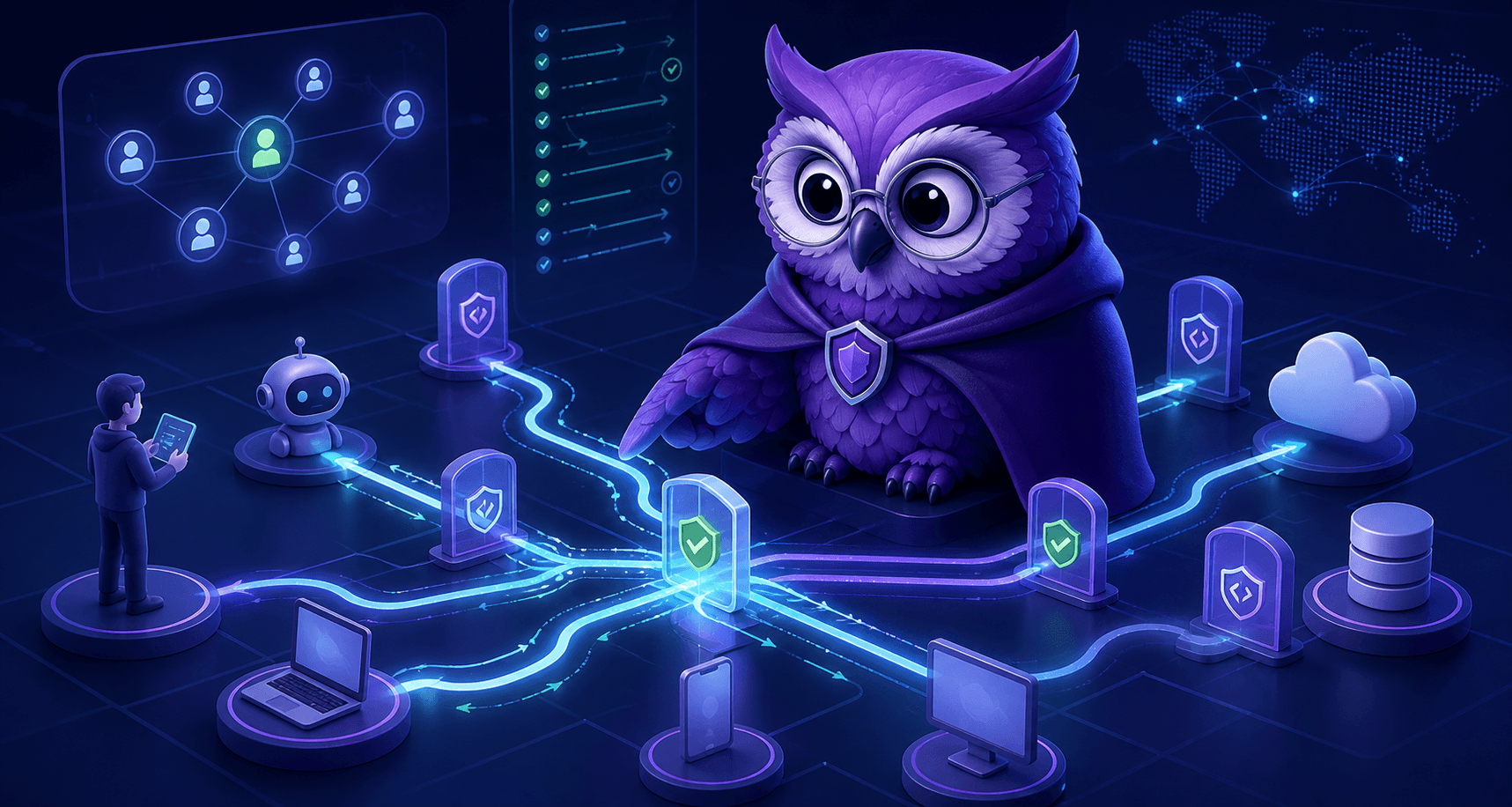
Zero Trust in the age of AI agents means every human, model, agent, device, API, repository, and workflow must prove identity, need, context, and authority before action. Network location is no longer the trust boundary.
NIST's February 2026 work on AI agent identity and authorization is a timely signal that the real enterprise risk is no longer model output alone, but what agents are allowed to do, prove, and audit once they start acting.
AWS used mid-May 2026 guidance to make a useful point for defenders: secure AI programs start with identity, access, and guardrails in the prototype phase rather than after agents reach production.
Security teams do not need every product team wiring its own OpenAI, Anthropic, Bedrock, Vertex AI, and coding-agent credentials. A centralized LiteLLM gateway can make GenAI and agentic-code usage more controlled, vetted, auditable, and cost-aware.
Model Context Protocol can make AI tools dramatically more useful, but it also expands trust boundaries. Security teams should treat MCP like a privileged integration layer: sandbox servers, minimize scopes, block token passthrough, defend against SSRF, and review every tool as a potential remote-action surface.
Frontier AI models are moving from code suggestions to sustained cyber operations. Security teams should assume quiet, multi-step AI-driven intrusion attempts are becoming realistic and update controls before attackers operationalize them.
Implementation guides
A practical comparison of LiteLLM, Portkey, and AWS multi-provider GenAI gateway patterns for security teams centralizing model access, policy, logging, and token controls.
Reusable security-team workflows for Antigravity CLI, GitHub Copilot CLI, Claude Code, and OpenAI Codex, including secure code review, dependency triage, CI/CD audit, sandboxed remediation, and agent governance.
A security-focused comparison of Claude Code, OpenAI Codex, GitHub Copilot CLI, Antigravity CLI, and Cursor for secure code review, vulnerability remediation, AppSec workflows, and enterprise guardrails.
Practical AI-assisted GitHub security skills for code scanning, secret scanning, pull request review, dependency triage, and secure coding workflows.