
Why Every Company Needs a Secure Break-Glass Recovery Path After a Breach
When a breach takes down identity, admin access, or critical systems, companies need a tightly controlled recovery path to restore essential services without improvising under pressure. The answer is not a hidden backdoor. It is a secured, tested break-glass architecture.
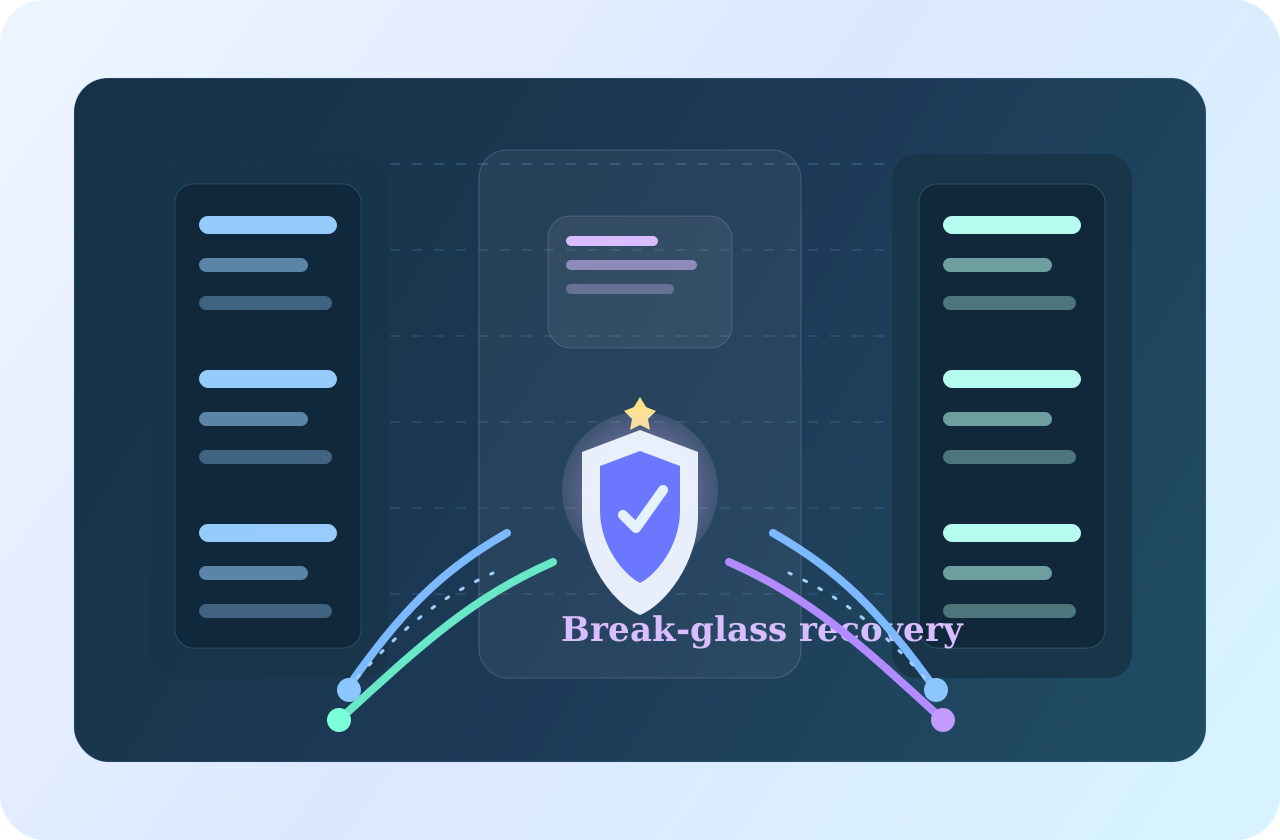
Most organizations spend more time thinking about how to keep attackers out than how to keep critical services alive after a breach. That imbalance becomes dangerous the moment identity systems, privileged accounts, or recovery tooling are disrupted. If administrators cannot authenticate, if customer-facing services depend on broken trust chains, or if ransomware has damaged the systems used to manage restoration, the company can end up interrupting customers long after the initial compromise. The practical answer is not a secret technical backdoor. It is a deliberately secured break-glass recovery path designed for emergencies.
That distinction matters. A hidden backdoor is something attackers eventually find and abuse. A secure break-glass path is the opposite: narrowly scoped, heavily controlled, separately protected, audited, and used only when normal administration is unavailable. The purpose is to restore critical authentication and essential services without relying on the same dependencies that may already be compromised. If the normal identity provider is down, if multifactor methods are unavailable, or if administrators are locked out by policy failure or attacker activity, the organization still needs a way to reestablish control safely.
In practice, that means defining the minimum services that must survive an incident. For many companies, that list includes core identity, customer authentication, DNS, privileged administration, internal communications, payment flows, and the applications that keep support and operations running. Recovery planning should then work backward from those priorities. Which credentials are required to bring those systems back? Which dependencies must be isolated from the primary identity plane? Which systems must have offline or out-of-band recovery options? The companies that handle major incidents best are usually the ones that have answered these questions before they are tired, under pressure, and already losing money.
A mature break-glass design usually includes two or more emergency access accounts that are not tied to the same fragile dependencies as normal admin access. Those accounts should be strongly protected, stored securely, monitored aggressively, and tested regularly. They should not be casually reused for daily administration, and they should not depend on a single employee device, a single identity federation path, or the same routine authentication factors that may fail during an outage. Just as important, the break-glass path should be exercised from a secure workstation or similarly hardened environment rather than from an arbitrary laptop in the middle of a crisis.
Identity is only one part of the picture. Recovery also needs technical isolation. Offline or segmented backups, clean recovery networks, restored systems that are verified before reconnecting, and documented service-priority runbooks all matter. If the organization can bring systems back but accidentally reintroduces attacker access, the break-glass process becomes a loop instead of a recovery path. That is why restoration should follow a clean-room mindset: rebuild trust deliberately, restore the most important customer-impacting services first, and keep strong evidence on what was recovered, when, by whom, and from which known-good source.
The leadership challenge is cultural as much as technical. Some executives resist these capabilities because they worry that emergency access paths sound risky or look like exceptions to zero trust. But zero trust does not mean zero recovery. It means designing trust boundaries intentionally. A secure break-glass capability is part of resilience, not a violation of it. The real risk is discovering during an incident that the company has no independent route to restore authentication, reestablish privileged control, and bring customer services back online without improvising new permissions in the middle of a breach.
The near-future standard should be clear: every company that depends on digital services should know exactly how it would restore critical authentication and customer-facing operations if its primary identity and admin paths were disrupted. That requires emergency access accounts, protected recovery workflows, offline or segmented restoration options, recurring drills, and executive agreement on service priorities. Customers rarely care whether a company had a sophisticated policy model before an incident. They care whether the service came back safely, quickly, and without a second failure during recovery.
Source notes
Follow these links to check the reporting and documentation behind this article.